
Typical. You wait ages for a new Mass Effect and then three come along at once. Well, not quite, but there are three major contenders for Shepard’s helmet in various stages of production right now. Alongside the actual next Mass Effect from the studio currently calling itself BioWare, believed to be heading for a 2028 release, we have two complementary visions of spacebound role-playing: Exodus, an honest-to-goodness spiritual redux of Mass Effect Andromeda from actual ex-BioWare devs, and The Expanse: Osiris Reborn, a foray into something resembling Triple-A from the people behind Warhammer 40k: Rogue Trader, obviously based on the Amazon Prime series everyone loves but nobody watched.
So Mass Effect fans, in theory, are set to eat very good indeed over the next couple of years. But do any of these projects really have the juice, the massive antimatter reactor up their backsides required to impress fans of a series that is now so old it has become A Classic and therefore remembered with a lot of vaseline on the lens, its myriad imperfections buffed away by the chamois cloth of nostalgia? Can anything live up to that?
It’s a difficult question to answer at this stage having only played one of them, and a small slice at that, but we do know a fair bit about each project and their respective goals.
The pitch for The Expanse: Osiris Reborn feels like the sort of unlikely dream game that only exists in wistful forum threads. Science fiction fans in particular are prone to imagining their favourite shows as BioWare style RPGs. “What if we had a Star Trek game like Mass Effect?”, “Imagine BioWare did a Stargate game!”, etc etc. It’s not an unreasonable suggestion, given how all of these things are about visiting a bunch of different planets from a home base, having Cool Adventures, and doing relationships (doing them vigorously and often in Captain Kirk’s case). So the first thought about Osiris Reborn is: wow, it’s actually happened! Popular space adventure show gets a BioWare style game. Sometimes miracles do occur.
The Expanse doesn’t seem like the most obvious choice as a basis for this sort of game, given how most of it occurs within a single star system. But, the fact that it is a scifi universe made up of tiny colonies and orbital habitats may be a godsend for a team tasked with building a Mass Effect game within it: an inner solar system full of prefabs and mass-produced tech, all human designed and heavily extrapolated from contemporary life. They don’t have to figure out what a Quarian glove or a Turian helmet looks like. They don’t have to invent the logistics of a society that caters to wildly different breathing requirements. And, much of the production design can be adapted from the TV show that already exists. I would imagine, although this is not a given, that Owlcat has access to certain production materials that would make that process easier. If not, there’s no shortage of reference frames.
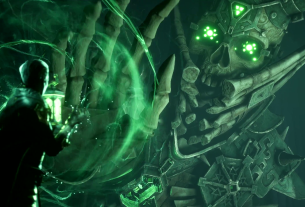
They’re not imagining an entire universe from scratch, unlike the team behind Exodus, who have bitten off a lot more to chew in the grand scheme of genre entertainment. This is a universe that’s much closer to something like Dune or Foundation – Earth long gone, humanity spread amongst thousands of stars and starting to evolve into something else, technology sufficiently advanced to be considered magic. Proper science fiction from when petrol was 9p a litre and your average scifi author was taking so many psychedelics that the mushrooms could have sued for royalties.
So these are two visions of science fiction that have a great deal of crossover, in their roots, their format, their inspirations, but they are wildly different places to be in, so while they are both looking to capture the same audience I think there’s room for both of them to exist. Especially if you consider the insatiable appetite of science fiction fans. And I’m not talking about our eating habits, I know that’s the joke you just made in your head.
The other thing to consider in determining “The Juice” is that every post-Mass Effect game has to be its own proposition. Neither Owlcat, Archetype, or even BioWare themselves can just do Mass Effect again because it already exists. So whatever follows up on it, however directly or indirectly, must be bringing something to the table.
In the case of Mass Effect 5, the proposition is simply: you’re already invested, this is what happens after the reaper war. I have to be honest, as much as I love the original trilogy – and I cannot stress enough that I love the original trilogy – I just don’t think it’s a story that needs to continue. Depending on the ending you get, it can be hopeful, or devastating, or both, but it is a full stop. So in my view, it’s not a great pitch. We’ll see, but given BioWare’s recent track record, I’m not expecting any juice, I’m expecting a glass of tap water.
For both The Expanse and Exodus, the special sauce is in harnessing real scientific concepts as game modifiers.
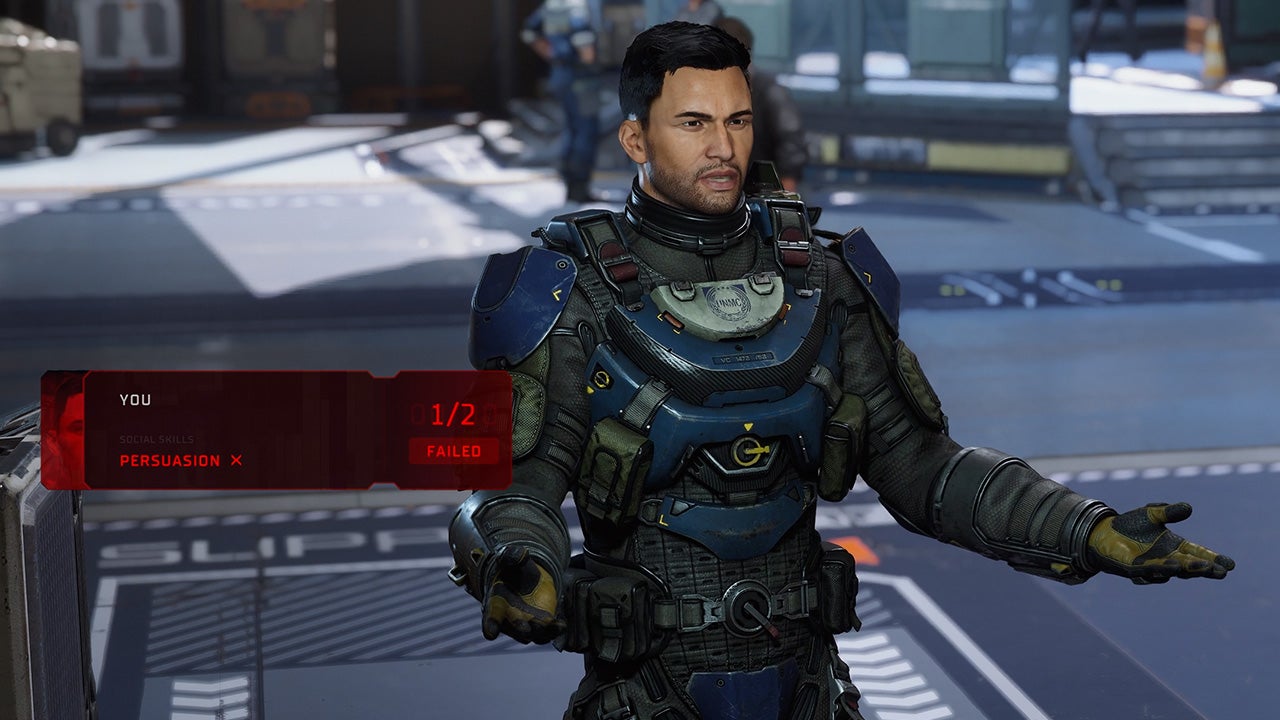
The Expanse emphasises the details of life in space, and making them feel correct. This approach has a tactile effect on the gameplay. A big touted feature is zero-g combat: clinging to the hull of a ship or station with mag boots and having a shootout you can barely hear aside from comms chatter and any clang sufficiently big enough to vibrate through your suit. It’s an odd experience at first, much like trying to play Gears of War with your head wrapped in a wet towel.
There’s an eerieness to it that really gets across how close anyone in a spaceship is to oblivion. Play with headphones on and you’ll hear your character’s breathing from inside their helmet, as if it’s your own, which is an absurdly powerful trick to pull while your character is looking up at the planet Jupiter, just hanging there in the sky, all majestic and terrifying, with you stuck like a fridge magnet to the side of a celestial Welcome Break in what is a beautifully stark reminder that if we ever do make it to the stars we’re still going to be us, we’re still going to be silly bald monkeys, eating microwaved noodles and watching soap operas while the jovian rise happens right outside.
It’s an arresting moment of magic in a cruelly short section of game, one clearly in need of a lot of polish before it releases early next year. Ever since people have gotten a good look at it, a few collective concerns have emerged: firstly, that it’s a bit janky. I can attest from playing it that it’s fiddly to control. It feels distinctly unrefined in the hands right now. But that’s not really an issue at this stage, it’s a beta, this is what betas are like, we’re miles out from the polishing phase. The other major concern is that the voice acting is, and let’s not mince words here, bloody atrocious.
The voice work from the lead characters is so flat that more than a few commenters are questioning whether it’s AI generated or not. Personally I don’t think so, I mean, ChatGPT didn’t invent bad acting, but the studio can hardly blame anyone for that particular cloud of suspicion hanging over its head.
That’s an aside – the main point, that the cutscenes are honking, is worrying. It doesn’t sound like placeholder stuff, it sounds like a final or damn close to final mix, and so the worst Irish accent I’ve ever heard in my life is, it seems, deliberate. Someone did it, others heard it, and a manager signed it off.
All I know is, this project lives or dies on its story. As a gameplay experience there’s nothing particularly special about it: it’s One of Those Games. Cover shooting, light squad management, special abilities with cooldowns. Every part of it plays exactly as you’d expect from years as a Mass Effect enjoyer. It all works, I’m sure with a year of polish it’ll be absolutely fine. If there are any mechanical surprises in the final game, there’s certainly no evidence of it in this demo build. Even the much hyped zero-g combat seems to mostly manifest as the player character running like she’s dealing with the consequences of a boiled egg madras.
Their previous and also very BioWare-ish work, Rogue Trader, has a lot of wonderful writing in it, so I have no doubt that Owlcat has the talent on hand to invent a good Expanse story as words on a page. But if the presentation doesn’t get a lot more convincing in the final release, that story is going to be obstructed by clouds of guff. Good acting and direction can carry a rubbish script, but it rarely works in reverse.
I have some nagging doubts, and I’m eager to see what the game looks like in a more finished state so those worries can quiet down, but there is a solid foundation here for a game based on a TV show a greatly enjoyed, that appears to have nailed its atmosphere, its aesthetic, and its permeating theme that life in space will always be lived on the precipice of annihilation. Because we're patently not supposed to be there – and yet, we will persist.
So, at this point it’s mixed: I think OwlCat understands the assignment, of that I never had any doubt because they’re talented people, and they’ve got a good track record of working their magic within the framework of a licensed IP. But whether it’s an assignment they’re really ready for remains to be seen.
That’s a glass half full of juice… which can be more disappointing than no juice at all.
Exodus has much grander ambitions, borrowing the real scientific concept of relativistic time dilation as a narrative device that basically means time passes quicker on your homeworld than it does for you while you’re cutting about the galaxy. This opens up massive opportunities for the choice and consequence narratives that we all expect from these kinds of games.
For example, imagine you have a love interest on the homeworld, and an upcoming mission which for you will take a few weeks but for them will take five or six years. Then, some sort of miscalculation throws off the timetable and by the time you get back, your love interest is in their nineties. I’m not just imagining that, it was described to us by the developers in an interview back when they revealed the game in 2023.
Putting aside the terrifying complexity of that from a development point of view, the RPG implications are delicious: imagine seeing the consequences of your decisions played out not just in their immediate aftermath, but over lifetimes, on a massive, civilisation-altering scale. Imagine a society that has to deal with that. How would human beings cope with their lives being lived so asymmetrically? So out of sync?
The hard reality of these things is that they are constrained by time and budget, and so I’m not imagining there’s going to be hundreds of permutations of the story but it’s certainly interesting from a narrative perspective. What we’ve seen in trailers looks great, a very odd universe with talking bears and pigs and that, which is Russel T. Davies as hell (complimentary). Tentatively, I stress tentatively, high juice potential. Like, if it comes together, they’ll have so much juice the LAPD are gonna end up chasing it in a Ford Bronco.
All that said, what's really exciting right now is that there are so many space RPGs on the way for all of us nerdy little goblins to get lost in instead of going outside. Have you seen it out there? It’s vile. People ask you stuff like “would you like a bag”, and other impertinent questions. BioWare may be a shadow of its former self, but its legacy shines on in all the teams it has inspired to try and reach its stratospheric highs. And let’s not write anything off for being a bit janky: the original Mass Effect had plenty of that, and look where we are.
Jim Trinca is a Video Producer at IGN, and when he isn't fawning over Assassin's Creed, he can be found watching Star Trek and eating stuff. Follow him on @jimtrinca.bsky.social, and check out The Trinca Perspective playlist over on IGN's YouTube channel!