
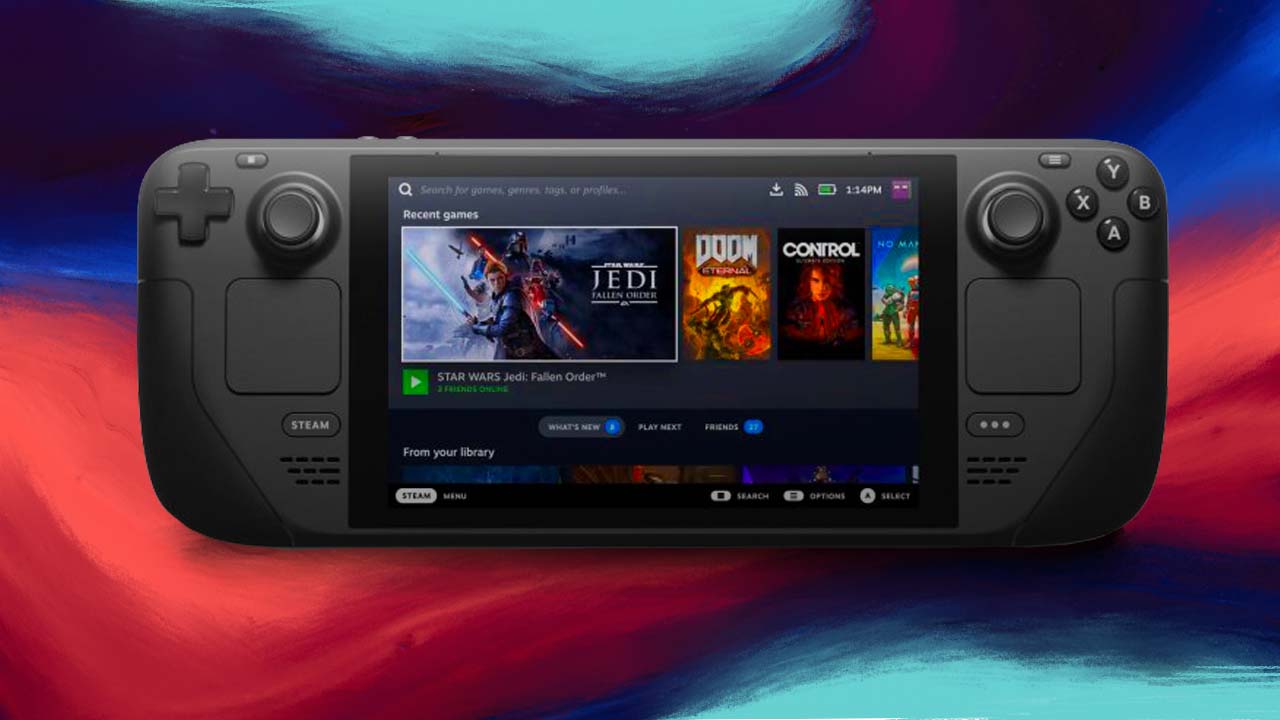

It’s no secret that Valve is “hard at work” on Steam Deck 2 – its devs have said as much every time I’ve asked that question over the last several years, and their plans for a sequel have been clear from the start.
The crux of the message has always been that Valve is waiting for the proper technology in order to present a true “generational leap” in performance. The unspoken part of that, of course, is that Valve is waiting for not just the right level of performance, but the correct performance to price ratio that would make Steam Deck 2 a viable product.
In the time since the Steam Deck originally launched, a number of other, more powerful handheld gaming PCs have come to market – all at moderate to significantly higher prices. In other words, the performance might be there now, but the price isn’t.
It might be a worry, then, that the RAM crisis that has driven up hardware prices – everything from graphics cards to gaming consoles to the Steam Deck itself – would impact Valve’s plans for a device so sensitive to component costs like the Steam Deck 2.
Thankfully, Valve says its plans haven’t changed. My colleague Jackie recently sat down with Valve software developers Pierre-Loup Griffais and Jeff Leinbaugh, and they had a reassuring answer to her question about whether the ongoing RAM shortage has impacted Valve’s plans.
“Not really,” said Griffais. “We've talked before about how we want to make sure there's a very delineated performance improvement for something like a future Steam Deck, and I think we're still looking at it in the same way.
“It's just a matter of looking at the current conditions and seeing how and when we can deliver something like that. But from what we're working on, as far as the user experience goes and what the product that we're trying to build goes, it's very similar goals.”
To me, that sounds like Valve’s target hasn’t changed, but the timeline might have. As I said before, it’s all about finding the right price to performance ratio where a new Steam Deck would make sense.
On the other hand, the Steam Machine and Steam Frame have shown that Valve isn’t afraid of simply passing higher component prices along to the consumer. But given that Steam Deck demand has reportedly cratered due to its ballooned price, up to $789 for the 512GB OLED model that previously cost $549, I have to assume that Valve is in no hurry to push out an overpriced Steam Deck 2.
In the meantime, there’s no shortage of Valve hardware on the market, as the company’s 2026 slate of devices are finally all out in the wild. For more on that, be sure to check out our review of the Steam Frame, as well as why there’s no new Half-Life game.